2026
Casa-Castillo
architecture
production
eng
esp
La historia de este proyecto comienza con dos imágenes olvidadas, colgadas de las paredes de esta vieja oficina, que llamaron poderosamente nuestra atención. Por sí solas quizá no hubieran significado nada, pero juntas entablaban una curiosa conversación. Situadas a un lado y a otro del espacio vacío, un castillo medieval y una lámina de La corde sensible de Magritte abrían su diálogo hacia nosotros. Así fue cómo, de este modo tan inopinado, tan casual, tan fortuito, aparecía la imagen-idea, la chispa de luz, que detonaba el origen del proyecto.
Había que levantar un castillo, esa era nuestra tarea. Pero no un castillo cualquiera. Magritte nos proponía deformarlo, soñarlo, inventarlo. Comprender la radicalidad de su imagen para finalmente imaginarlo. Había que viajar a su pasado, y disfrutarlo allí en su momento de máximo esplendor; pero al mismo tiempo había que situarlo en nuestro mundo contemporáneo, que dotaba a la imagen de una interesante ambivalencia.
En efecto, la imagen del castillo, por un lado, apelaba al paisaje medieval de una geografía misteriosa, repleta de historias fascinantes, escondidas tras sus murallas, donde una serie de salas, salones y pasadizos custodiaban los secretos de damas y caballeros: era el castillo interior, el espacio ensoñado, la sala del Grial, el mundo literario. El otro aspecto de la imagen actualizaba su significado: hoy, los castillos no han podido soportar el paso del tiempo, haciendo sucumbir su antigua imperiosa presencia; era el castillo convertido en monumento, la imagen de la ruina, el muro a punto de romperse.
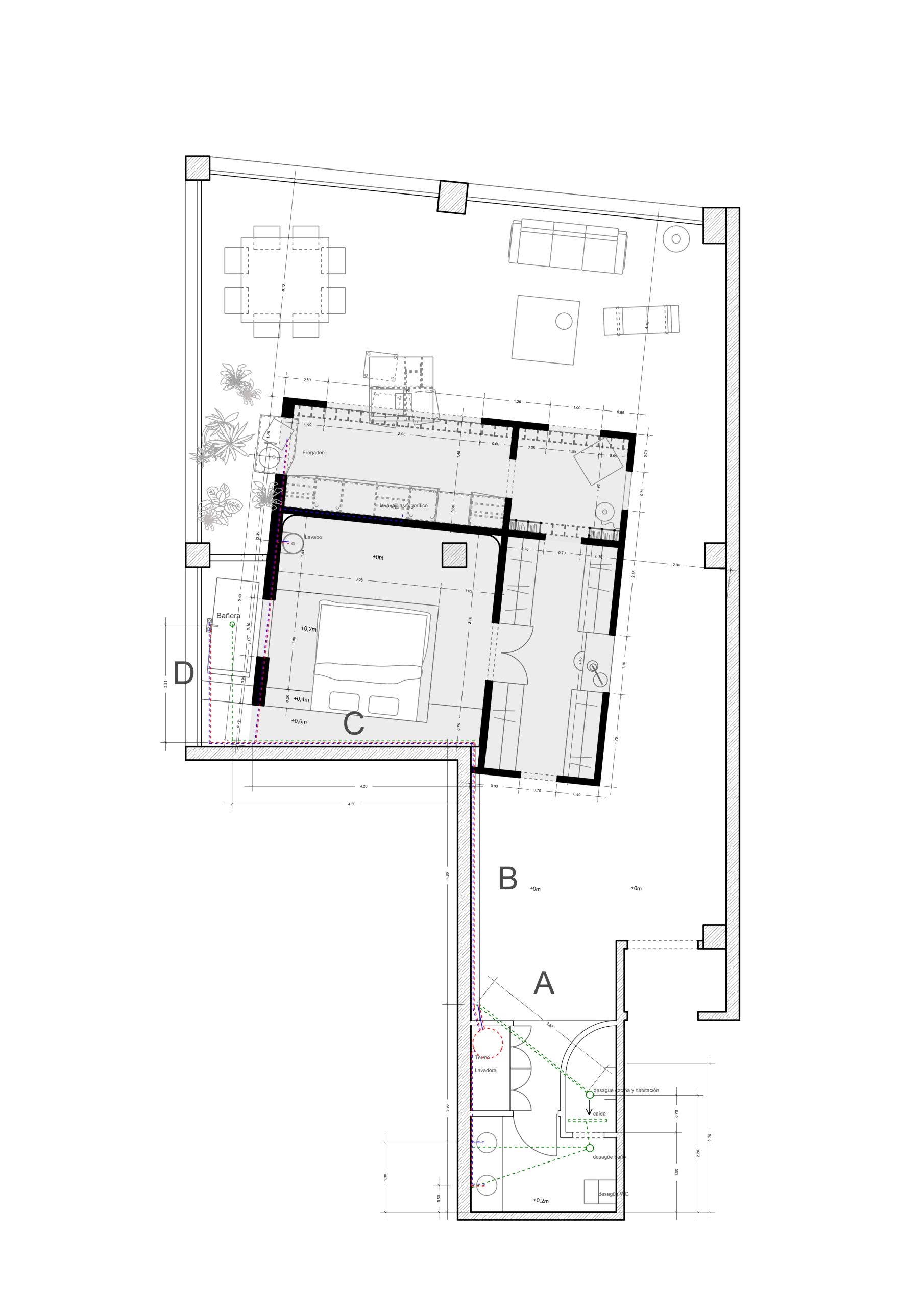
El castillo se concentra en un cuadrado de 7x7 metros que establece un límite primordial en la casa, creando un fuera y un dentro. La parte exterior se relaciona directamente con la materialidad del espacio industrial, que apenas se toca. A este lado, el castillo se desnuda, se despoja de toda ostentación y, por casi, se derrumba: de esta premisa nace el muro quebrado, que se gira 7º, ofreciendo una imagen a la vez ruinosa y monumental. Este espacio que rodea el corazón de la casa se concibe como una especie de jardín intermedio entre la villa y la fortificación. Las salas aquí pueden adquirir cualquier función: vestíbulos o habitaciones, salas más pequeñas o más grandes, zonas de estancia o comedores.
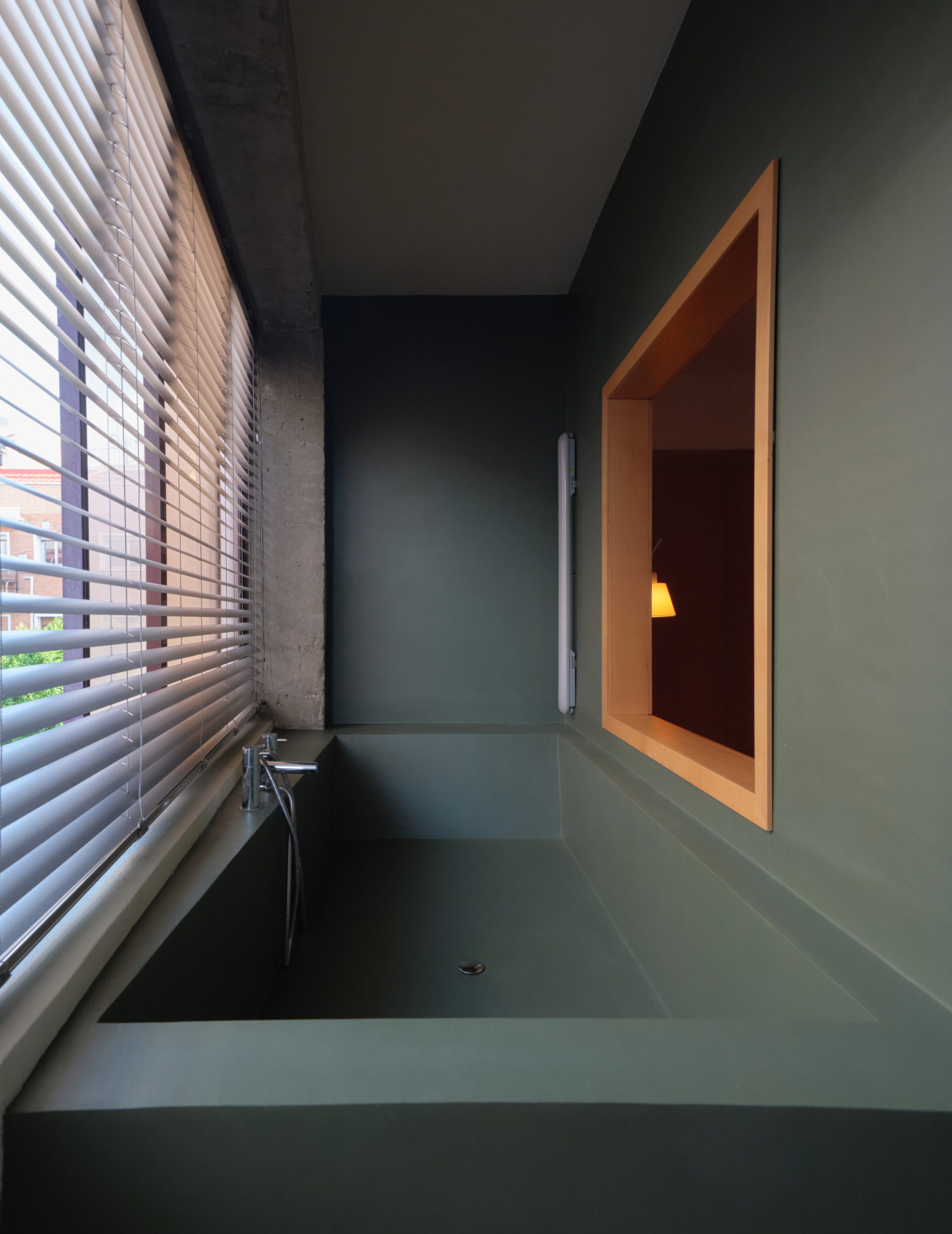
La parte interior es la fortaleza, la casa propiamente dicha, donde se invirtió la mayoría de los recursos: madera, moqueta, acero inoxidable y color aportan una identidad diferente a cada uno de los cuatro espacios. Hay que imaginar entrar a esta casa y, una vez dentro, pasearla: deambular por sus habitaciones, descubrir sus rincones, entrar y salir del castillo. De este modo se suceden el pasadizo-armario y la biblioteca, los aposentos o la cocina. Todos ellos se organizan conectados, interconectados, relacionándose unos con otros abriendo las vistas y, a veces, también el paso. Solo una puerta permite a los dueños del castillo cerrarse bajo llave en su habitación, darse un plácido baño y, finalmente, dormir.
Apéndice: (imagina) vivir con dignidad
No hay proyecto pequeño. No lo hay. Y por el mismo motivo, no hay vida pequeña: no la hay. La arquitectura tiene el poder de otorgar dignidad a la vida humana. Poder mágico que tantas veces olvida. Y magia rima con imagen, del latín imago, «producto de la mente»: de la imaginación.
No hay encargo pequeño. ¡No lo hay! Cualquier pequeña intervención, el baño más humilde, por poner un ejemplo, puede llenarse de vida. ¿Y cómo se hace esto? Imagina el camino del agua: las nubes, el río, la lluvia. Las gotas que caen y recorren los tejados para después circular por los canalones y llenar finalmente las tuberías. De pronto esa gota hace su aparición en el lavabo: de un grifo mana la vida. La arquitectura tiene el poder de pensar estos objetos, estos artilugios, estos espacios. Hay que imaginarlos —imaginarlos como la escritura imagina sus cuentos, sus novelas, sus ensayos. Hay que diseñarlos, componerlos, ¡proyectarlos!
El presupuesto de esta casa estaba bastante por debajo de lo que hubiéramos deseado: por eso la idea de concentrar los esfuerzos en un cuadrado de 7x7 metros fue tan importante. Visto así, el presupuesto se hizo gigante. Los clientes querían tener un fregadero que mirara hacia la calle. ¡Y una bañera en su habitación! Para ello había que llevar 14 metros las instalaciones. Imaginamos entonces cómo podía ser ese camino del agua; lo ubicamos en un muro grueso que podía alojar las tuberías, asumir la pendiente y llegar finalmente a su bajante. De este modo los clientes pueden ser felices en su casa, sin necesidad de haber derrochado dinero levantando innecesariamente metros cúbicos de suelo.
Sin duda, para levantar este castillo, y hacer que se mantenga en pie por muchos años, tuvimos que ponerle imaginación. Imaginación, trabajo y un poco de sentido común. Tres herramientas antiguas que, poco a poco, vamos ejercitando con los años. Imaginar es soñar un mundo nuevo. Trabajar es perseguir esos sueños. Y el sentido común confiere cierta sensatez a esos extraños procesos por los que discurre el pensamiento cuando, obstinadamente, imagina o… trabaja.
Madrid, 2026
Había que levantar un castillo, esa era nuestra tarea. Pero no un castillo cualquiera. Magritte nos proponía deformarlo, soñarlo, inventarlo. Comprender la radicalidad de su imagen para finalmente imaginarlo. Había que viajar a su pasado, y disfrutarlo allí en su momento de máximo esplendor; pero al mismo tiempo había que situarlo en nuestro mundo contemporáneo, que dotaba a la imagen de una interesante ambivalencia.
En efecto, la imagen del castillo, por un lado, apelaba al paisaje medieval de una geografía misteriosa, repleta de historias fascinantes, escondidas tras sus murallas, donde una serie de salas, salones y pasadizos custodiaban los secretos de damas y caballeros: era el castillo interior, el espacio ensoñado, la sala del Grial, el mundo literario. El otro aspecto de la imagen actualizaba su significado: hoy, los castillos no han podido soportar el paso del tiempo, haciendo sucumbir su antigua imperiosa presencia; era el castillo convertido en monumento, la imagen de la ruina, el muro a punto de romperse.
El castillo se concentra en un cuadrado de 7x7 metros que establece un límite primordial en la casa, creando un fuera y un dentro. La parte exterior se relaciona directamente con la materialidad del espacio industrial, que apenas se toca. A este lado, el castillo se desnuda, se despoja de toda ostentación y, por casi, se derrumba: de esta premisa nace el muro quebrado, que se gira 7º, ofreciendo una imagen a la vez ruinosa y monumental. Este espacio que rodea el corazón de la casa se concibe como una especie de jardín intermedio entre la villa y la fortificación. Las salas aquí pueden adquirir cualquier función: vestíbulos o habitaciones, salas más pequeñas o más grandes, zonas de estancia o comedores.
La parte interior es la fortaleza, la casa propiamente dicha, donde se invirtió la mayoría de los recursos: madera, moqueta, acero inoxidable y color aportan una identidad diferente a cada uno de los cuatro espacios. Hay que imaginar entrar a esta casa y, una vez dentro, pasearla: deambular por sus habitaciones, descubrir sus rincones, entrar y salir del castillo. De este modo se suceden el pasadizo-armario y la biblioteca, los aposentos o la cocina. Todos ellos se organizan conectados, interconectados, relacionándose unos con otros abriendo las vistas y, a veces, también el paso. Solo una puerta permite a los dueños del castillo cerrarse bajo llave en su habitación, darse un plácido baño y, finalmente, dormir.
Apéndice: (imagina) vivir con dignidad
No hay proyecto pequeño. No lo hay. Y por el mismo motivo, no hay vida pequeña: no la hay. La arquitectura tiene el poder de otorgar dignidad a la vida humana. Poder mágico que tantas veces olvida. Y magia rima con imagen, del latín imago, «producto de la mente»: de la imaginación.
No hay encargo pequeño. ¡No lo hay! Cualquier pequeña intervención, el baño más humilde, por poner un ejemplo, puede llenarse de vida. ¿Y cómo se hace esto? Imagina el camino del agua: las nubes, el río, la lluvia. Las gotas que caen y recorren los tejados para después circular por los canalones y llenar finalmente las tuberías. De pronto esa gota hace su aparición en el lavabo: de un grifo mana la vida. La arquitectura tiene el poder de pensar estos objetos, estos artilugios, estos espacios. Hay que imaginarlos —imaginarlos como la escritura imagina sus cuentos, sus novelas, sus ensayos. Hay que diseñarlos, componerlos, ¡proyectarlos!
El presupuesto de esta casa estaba bastante por debajo de lo que hubiéramos deseado: por eso la idea de concentrar los esfuerzos en un cuadrado de 7x7 metros fue tan importante. Visto así, el presupuesto se hizo gigante. Los clientes querían tener un fregadero que mirara hacia la calle. ¡Y una bañera en su habitación! Para ello había que llevar 14 metros las instalaciones. Imaginamos entonces cómo podía ser ese camino del agua; lo ubicamos en un muro grueso que podía alojar las tuberías, asumir la pendiente y llegar finalmente a su bajante. De este modo los clientes pueden ser felices en su casa, sin necesidad de haber derrochado dinero levantando innecesariamente metros cúbicos de suelo.
Sin duda, para levantar este castillo, y hacer que se mantenga en pie por muchos años, tuvimos que ponerle imaginación. Imaginación, trabajo y un poco de sentido común. Tres herramientas antiguas que, poco a poco, vamos ejercitando con los años. Imaginar es soñar un mundo nuevo. Trabajar es perseguir esos sueños. Y el sentido común confiere cierta sensatez a esos extraños procesos por los que discurre el pensamiento cuando, obstinadamente, imagina o… trabaja.
Madrid, 2026
The story of this project begins with two forgotten images hanging on the walls of an old office that immediately caught our attention. Taken separately, they might have meant nothing; together, however, they entered into a curious conversation. Positioned on either side of an empty space, a medieval castle and a print of Magritte's La corde sensible opened a dialogue before us. It was in this most unexpected, accidental, almost fortuitous way that the image-idea—the spark of light that ignited the project—first appeared.
We had to build a castle. That was our task. But not just any castle. Magritte invited us to distort it, to dream it, to reinvent it. We had to understand the radical nature of his image in order to imagine it anew. We had to travel back to its past and experience it at the height of its splendour, while at the same time placing it within our contemporary world, where the image acquired a compelling ambiguity.
Indeed, on the one hand, the image of the castle evokes the medieval landscape of a mysterious geography, filled with fascinating stories hidden behind its walls, where halls, chambers and passageways guard the secrets of ladies and knights: the inner castle, the dreamed space, the Grail chamber, the literary world. On the other hand, its present condition renews its meaning; today, castles have been unable to withstand the passage of time, their once commanding presence gradually collapsing. It is the castle transformed into a monument, the image of the ruin, the wall on the verge of breaking apart.
The castle is condensed into a 7 × 7 metre square that establishes a primordial boundary within the house, creating an inside and an outside. The exterior relates directly to the materiality of the industrial shell, which remains largely untouched. Here, the castle is stripped bare, divested of all ostentation, almost on the point of collapse. From this premise emerges the fractured wall, rotated by seven degrees, offering an image that is at once monumental and ruinous. The space surrounding the heart of the house is conceived as a kind of intermediate garden between the villa and the fortress. Here, the rooms can assume any function: entrance halls or bedrooms, larger or smaller living spaces, sitting rooms or dining areas.
The interior is the fortress itself, the house in the strict sense, where most of the resources were concentrated. Wood, carpet, stainless steel and colour give each of the four spaces its own distinct identity. One must imagine entering this house and, once inside, wandering through it: moving from room to room, discovering its corners, entering and leaving the castle. Thus unfold the wardrobe-passage and the library, the private chambers and the kitchen. All these spaces are arranged as a connected sequence, opening views towards one another and, at times, opening passages as well. Only one door allows the owners of the castle to lock themselves inside their chamber, enjoy a peaceful bath and, finally, fall asleep.
Appendix: (Imagine) Living with Dignity
There is no such thing as a small project. There simply isn't. For the same reason, there is no such thing as a small life. Architecture has the power to confer dignity upon human life—a magical power that it so often forgets. And magic rhymes with image, from the Latin imago, "that which is produced by the mind"—that is, by the imagination.
There is no such thing as a minor commission. There simply isn't. Even the humblest intervention—a modest bathroom, for instance—can be filled with life. But how is this achieved? Imagine the journey of water: the clouds, the river, the rain. The drops fall, run across the roofs, pass through the gutters and finally fill the pipes. Suddenly, that drop appears in the washbasin: from a tap, life begins to flow. Architecture has the power to think through these objects, these devices, these spaces. They must be imagined—imagined in the same way that literature imagines its stories, its novels and its essays. They must be designed, composed, projected.
The budget for this house was well below what we would have wished. That is why concentrating our efforts within a 7 × 7 metre square became so important. Seen in this way, the budget suddenly became enormous. The clients wanted a kitchen sink facing the street. And a bathtub in their bedroom. To achieve this, the plumbing had to travel fourteen metres. We imagined the journey that water would take and housed it within a thick wall capable of containing the pipes, accommodating the necessary slope and finally reaching the drainage stack. In this way, the clients can be happy in their home without unnecessarily spending money on additional square metres of construction.
Without question, to build this castle—and ensure that it will stand for many years—we needed imagination. Imagination, work, and a measure of common sense. Three ancient tools that we gradually learn to master over time. To imagine is to dream of a new world. To work is to pursue those dreams. And common sense lends a certain wisdom to the strange processes through which thought moves when it imagines and works.
Madrid, 2026
We had to build a castle. That was our task. But not just any castle. Magritte invited us to distort it, to dream it, to reinvent it. We had to understand the radical nature of his image in order to imagine it anew. We had to travel back to its past and experience it at the height of its splendour, while at the same time placing it within our contemporary world, where the image acquired a compelling ambiguity.
Indeed, on the one hand, the image of the castle evokes the medieval landscape of a mysterious geography, filled with fascinating stories hidden behind its walls, where halls, chambers and passageways guard the secrets of ladies and knights: the inner castle, the dreamed space, the Grail chamber, the literary world. On the other hand, its present condition renews its meaning; today, castles have been unable to withstand the passage of time, their once commanding presence gradually collapsing. It is the castle transformed into a monument, the image of the ruin, the wall on the verge of breaking apart.
The castle is condensed into a 7 × 7 metre square that establishes a primordial boundary within the house, creating an inside and an outside. The exterior relates directly to the materiality of the industrial shell, which remains largely untouched. Here, the castle is stripped bare, divested of all ostentation, almost on the point of collapse. From this premise emerges the fractured wall, rotated by seven degrees, offering an image that is at once monumental and ruinous. The space surrounding the heart of the house is conceived as a kind of intermediate garden between the villa and the fortress. Here, the rooms can assume any function: entrance halls or bedrooms, larger or smaller living spaces, sitting rooms or dining areas.
The interior is the fortress itself, the house in the strict sense, where most of the resources were concentrated. Wood, carpet, stainless steel and colour give each of the four spaces its own distinct identity. One must imagine entering this house and, once inside, wandering through it: moving from room to room, discovering its corners, entering and leaving the castle. Thus unfold the wardrobe-passage and the library, the private chambers and the kitchen. All these spaces are arranged as a connected sequence, opening views towards one another and, at times, opening passages as well. Only one door allows the owners of the castle to lock themselves inside their chamber, enjoy a peaceful bath and, finally, fall asleep.
Appendix: (Imagine) Living with Dignity
There is no such thing as a small project. There simply isn't. For the same reason, there is no such thing as a small life. Architecture has the power to confer dignity upon human life—a magical power that it so often forgets. And magic rhymes with image, from the Latin imago, "that which is produced by the mind"—that is, by the imagination.
There is no such thing as a minor commission. There simply isn't. Even the humblest intervention—a modest bathroom, for instance—can be filled with life. But how is this achieved? Imagine the journey of water: the clouds, the river, the rain. The drops fall, run across the roofs, pass through the gutters and finally fill the pipes. Suddenly, that drop appears in the washbasin: from a tap, life begins to flow. Architecture has the power to think through these objects, these devices, these spaces. They must be imagined—imagined in the same way that literature imagines its stories, its novels and its essays. They must be designed, composed, projected.
The budget for this house was well below what we would have wished. That is why concentrating our efforts within a 7 × 7 metre square became so important. Seen in this way, the budget suddenly became enormous. The clients wanted a kitchen sink facing the street. And a bathtub in their bedroom. To achieve this, the plumbing had to travel fourteen metres. We imagined the journey that water would take and housed it within a thick wall capable of containing the pipes, accommodating the necessary slope and finally reaching the drainage stack. In this way, the clients can be happy in their home without unnecessarily spending money on additional square metres of construction.
Without question, to build this castle—and ensure that it will stand for many years—we needed imagination. Imagination, work, and a measure of common sense. Three ancient tools that we gradually learn to master over time. To imagine is to dream of a new world. To work is to pursue those dreams. And common sense lends a certain wisdom to the strange processes through which thought moves when it imagines and works.
Madrid, 2026






credits
Reportaje de Pablo Zamora para ICON Design
/
Sillas de archivo 80s de Andreu Jaumot; lámpara Estel de Andreu Jaumot y Luis C. Nikuradse; mesa comedor de Enzo Mari; lámpara Ámbar de Andreu Jaumot; aplique Santa & Cole; estantería-librería de Casa Antillón; silla Cassina de Polop Store; atril de Casa Antillón en homenaje a Barragán
/
Dibujos realizados por Catalina Fernández durante el verano de 2026
2026
Laagam Bilbao
architecture
production
2026
Laagam amsterdam store
architecture
design
production
2024
A doorless house
architecture